 Solar PV Analysis of Puerto De La Cruz, Spain

Puerto de la Cruz, Spain, situated in the Northern Sub-Tropics, offers a promising location for solar PV energy generation throughout the year. This coastal town in northern Tenerife experiences relatively consistent solar radiation that makes it suitable for photovoltaic installations.
Seasonal Solar Production
Solar energy output at this location shows notable seasonal variations while maintaining decent production year-round. Summer naturally provides the highest yields at 7.12kWh per day for each kilowatt of installed capacity. Spring follows closely with 6.77kWh/day, making these the prime seasons for solar generation. Autumn production drops to 5.10kWh/day, while winter represents the annual low point at 4.08kWh/day per kW installed.
Even during winter months, the location's subtropical positioning ensures that solar production remains viable, unlike more northerly European locations where winter output can drop dramatically. The relatively small difference between summer and winter outputs (approximately 3kWh/day) indicates a fairly balanced year-round production profile.
Optimal Panel Installation
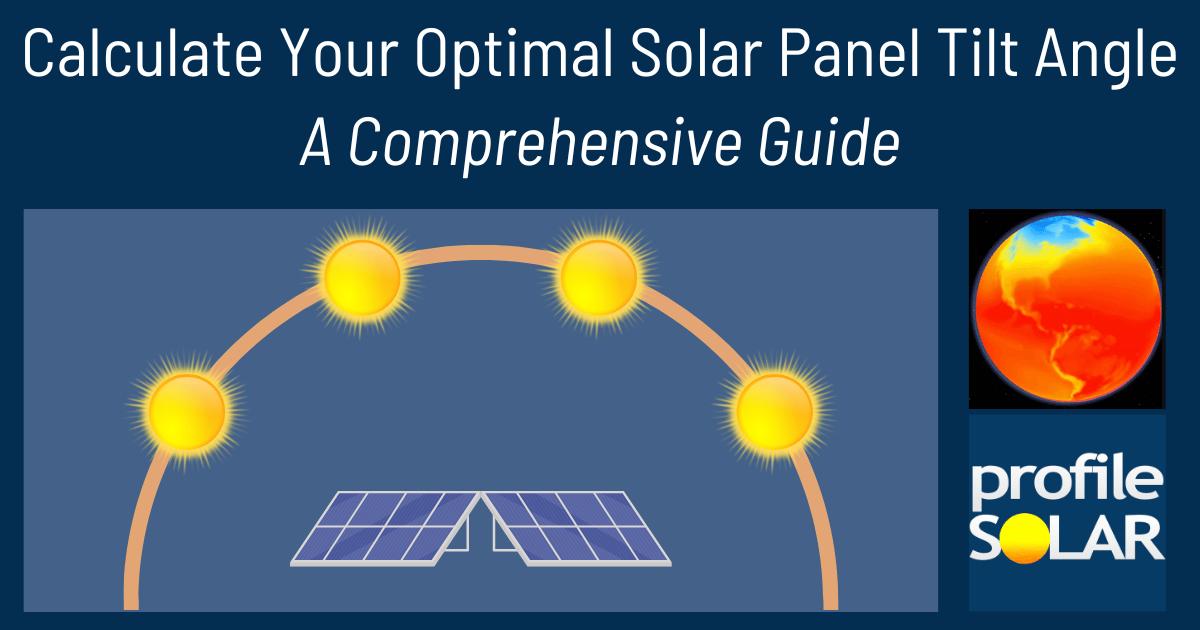
For fixed solar panel installations in Puerto de la Cruz, the ideal tilt angle to maximize year-round energy production is 25 degrees facing South. This carefully calculated angle optimizes the capture of solar radiation throughout the year, balancing the higher summer sun with the lower winter sun position.
Environmental Factors Affecting Solar Production
Several environmental factors could potentially impact solar energy generation in Puerto de la Cruz:
- Calima events (Saharan dust clouds) occasionally affect the Canary Islands, reducing solar radiation reaching panels. Regular cleaning maintenance can mitigate this issue.
- Salt spray from the nearby Atlantic Ocean may accumulate on panels, particularly during windy conditions. Using marine-grade components and implementing routine cleaning schedules helps prevent corrosion and performance degradation.
- While infrequent, occasional cloud cover from the nearby mountains can temporarily reduce production, particularly in winter months. Strategic placement away from mountain shadow paths can minimize this effect.
Despite these minor challenges, Puerto de la Cruz offers favorable conditions for solar energy production throughout the year. The consistent subtropical climate with minimal extreme weather events makes this location highly suitable for long-term solar PV installations, especially when appropriate maintenance routines are established.
Note: The Northern Sub Tropics extend from 23.5° latitude North up to 35° latitude.
So far, we have conducted calculations to evaluate the solar photovoltaic (PV) potential in 361 locations across Spain. This analysis provides insights into each city/location's potential for harnessing solar energy through PV installations.
Link: Solar PV potential in Spain by location
Solar output per kW of installed solar PV by season in Puerto De La Cruz
Seasonal solar PV output for Latitude: 28.4186, Longitude: -16.5473 (Puerto De La Cruz, Spain), based on our analysis of 8760 hourly intervals of solar and meteorological data (one whole year) retrieved for that set of coordinates/location from NASA POWER (The Prediction of Worldwide Energy Resources) API:




Ideally tilt fixed solar panels 25° South in Puerto De La Cruz, Spain
To maximize your solar PV system's energy output in Puerto De La Cruz, Spain (Lat/Long 28.4186, -16.5473) throughout the year, you should tilt your panels at an angle of 25° South for fixed panel installations.
As the Earth revolves around the Sun each year, the maximum angle of elevation of the Sun varies by +/- 23.45 degrees from its equinox elevation angle for a particular latitude. Finding the exact optimal angle to maximise solar PV production throughout the year can be challenging, but with careful consideration of historical solar energy and meteorological data for a certain location, it can be done precisely.
We use our own calculation, which incorporates NASA solar and meteorological data for the exact Lat/Long coordinates, to determine the ideal tilt angle of a solar panel that will yield maximum annual solar output. We calculate the optimal angle for each day of the year, taking into account its contribution to the yearly total PV potential at that specific location.

Seasonally adjusted solar panel tilt angles for Puerto De La Cruz, Spain
If you can adjust the tilt angle of your solar PV panels, please refer to the seasonal tilt angles below for optimal solar energy production in Puerto De La Cruz, Spain. As mentioned earlier, for fixed-panel solar PV installations, it is optimal to maintain a 25° South tilt angle throughout the year.
| Overall Best Summer Angle | Overall Best Autumn Angle | Overall Best Winter Angle | Overall Best Spring Angle |
|---|---|---|---|
| 12° South in Summer | 33° South in Autumn | 43° South in Winter | 21° South in Spring |
Our recommendations take into account more than just latitude and Earth's position in its elliptical orbit around the Sun. We also incorporate historical solar and meteorological data from NASA's Prediction of Worldwide Energy Resources (POWER) API to assign a weight to each ideal angle for each day based on its historical contribution to overall solar PV potential during a specific season.
This approach allows us to provide much more accurate recommendations than relying solely on latitude, as it considers unique weather conditions in different locations sharing the same latitude worldwide.
Calculate solar panel row spacing in Puerto De La Cruz, Spain
We've added a feature to calculate minimum solar panel row spacing by location. Enter your panel size and orientation below to get the minimum spacing in Puerto De La Cruz, Spain.
Our calculation method
- Solar Position:
We determine the Sun's position on the Winter solstice using the location's latitude and solar declination. - Shadow Projection:
We calculate the shadow length cast by panels using trigonometry, considering panel tilt and the Sun's elevation angle. - Minimum Spacing:
We add the shadow length to the horizontal space occupied by tilted panels.
This approach ensures maximum space efficiency while avoiding shading during critical times, as the Winter solstice represents the worst-case scenario for shadow length.
Topography for solar PV around Puerto De La Cruz, Spain
Puerto de la Cruz is situated on the northern coast of Tenerife, one of Spain's Canary Islands. The landscape around this coastal city is characterized by dramatic topographical features that create a visually stunning environment. The city itself sits at a relatively low elevation near sea level, but the terrain rises rapidly as one moves inland.
Coastal to Mountain Transition
The most striking topographical feature near Puerto de la Cruz is the steep rise from the coastal areas to the mountainous interior. The city is nestled at the foot of the La Orotava Valley, a vast amphitheater-shaped depression that slopes up from the coast toward the central highlands of the island. This valley was formed by ancient geological processes, including volcanic activity and erosion. As the land rises southward from Puerto de la Cruz, the gradient becomes increasingly steep. Within just a few kilometers of the coast, the elevation can increase by several hundred meters. This rapid change in elevation creates distinct microclimates and vegetation zones.Volcanic Influences
The entire topography of the region is fundamentally shaped by volcanic activity. Dominating the southern horizon is Mount Teide, Spain's highest peak at 3,718 meters above sea level. This stratovolcano forms the centerpiece of Teide National Park and has profoundly influenced the surrounding landscape through successive eruptions over geological time. The volcanic soil in the region varies in composition and depth depending on the specific location. In many areas, especially on slopes, the soil is relatively thin and rocky, while in valley bottoms, it can be deeper and more fertile.Potential for Solar PV Development
When considering areas suitable for large-scale solar photovoltaic installations near Puerto de la Cruz, several factors must be taken into account including topography, land availability, and environmental considerations. The southern slopes of the island, particularly those areas that lie beyond the immediate vicinity of Puerto de la Cruz but are still reasonably accessible, offer the most promising locations for solar PV development. These areas typically receive more direct sunlight throughout the year compared to the northern slopes where Puerto de la Cruz is located. Specifically, the mid-elevation areas (approximately 300-800 meters above sea level) to the south and southwest of Puerto de la Cruz present advantageous conditions. These zones are high enough to avoid most coastal cloud formations that can sometimes affect the northern coast but are below the elevation where terrain becomes too steep or inaccessible for practical development. The relatively flat plateaus and gently sloping areas found in parts of the La Orotava Valley, particularly those facing south or southwest, would be technically suitable. However, many of these areas are currently used for agriculture or are protected for their natural beauty and ecological value.Constraints and Considerations
It's important to note that much of the land around Puerto de la Cruz faces significant constraints for large-scale solar development. The steepness of many slopes makes construction challenging and expensive. Additionally, the region's renowned natural beauty and biodiversity have led to the establishment of protected areas where development is either prohibited or strictly regulated. The proximity to Teide National Park, a UNESCO World Heritage site, also imposes limitations on land use in surrounding areas. Any solar development would need to be sensitively planned to minimize visual impact on the landscape and avoid disrupting important ecological corridors. Agricultural land in the La Orotava Valley, much of which is dedicated to banana plantations and vineyards, represents another constraint as these areas contribute significantly to the local economy and cultural identity. The most promising areas for solar development would therefore be previously disturbed lands, abandoned agricultural plots, or designated industrial zones that offer suitable topography and solar exposure without compromising natural or cultural resources.Spain solar PV Stats as a country
Spain ranks 10th in the world for cumulative solar PV capacity, with 15,952 total MW's of solar PV installed. This means that 9.00% of Spain's total energy as a country comes from solar PV (that's 6th in the world). Each year Spain is generating 237 Watts from solar PV per capita (Spain ranks 20th in the world for solar PV Watts generated per capita). [source]
Are there incentives for businesses to install solar in Spain?
Yes, there are several incentives for businesses wanting to install solar energy in Spain. These include the following:
1. The Spanish government offers a feed-in tariff (FIT) for businesses that install solar energy systems. This FIT guarantees a fixed price per kWh of electricity generated by the system over a period of 20 years.
2. Businesses can also benefit from tax deductions and other financial incentives when installing solar energy systems in Spain.
3. Companies may be eligible for grants or subsidies from regional governments or local authorities to help cover the cost of installation and maintenance of their solar energy systems.
4. Businesses may also be able to take advantage of net metering, which allows them to sell excess electricity generated by their solar energy system back into the grid at market prices, thus reducing their overall electricity costs even further.
Do you have more up to date information than this on incentives towards solar PV projects in Spain? Please reach out to us and help us keep this information current. Thanks!
Citation Guide
Article Details for Citation
Author: Aaron Robinson
Publisher: profileSOLAR.com
First Published: Thursday 22nd of May 2025
Last Updated: Tuesday 2nd of December 2025
Tell Us About Your Work
We love seeing how our research helps others! If you've cited this article in your work, we'd be delighted to hear about it. Drop us a line via our Contact Us page or on X, to share where you've used our information - we may feature a link to your work on our site. This helps create a network of valuable resources for others in the solar energy community and helps us understand how our research is contributing to the field. Plus, we occasionally highlight exceptional works that reference our research on our social media channels.
Feeling generous?

Share this with your friends!


Compare this location to others worldwide for solar PV potential
The solar PV analyses available on our website, including this one, are offered as a free service to the global community. Our aim is to provide education and aid informed decision-making regarding solar PV installations.
However, please note that these analyses are general guidance and may not meet specific project requirements. For in-depth, tailored forecasts and analysis crucial for feasibility studies or when pursuing maximum ROI from your solar projects, feel free to contact us; we offer comprehensive consulting services expressly for this purpose.

Helping you assess viability of solar PV for your site
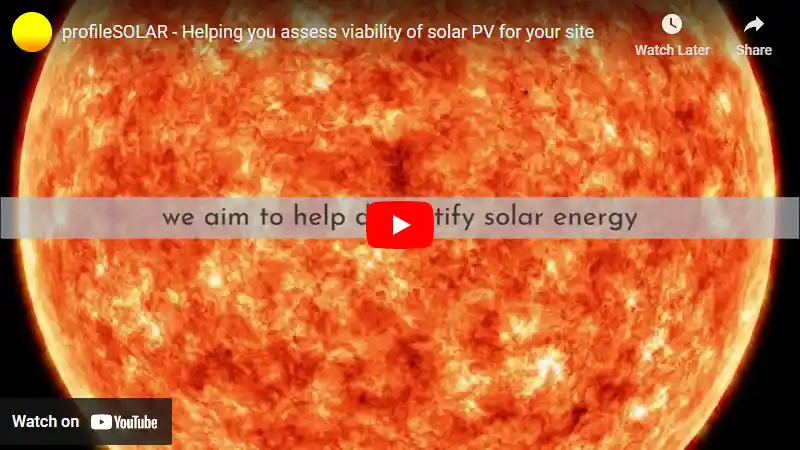
Calculate Your Optimal Solar Panel Tilt Angle: A Comprehensive Guide
Enhance your solar panel's performance with our in-depth guide. Determine the best tilt angle using hard data, debunk common misunderstandings, and gain insight into how your specific location affects solar energy production.